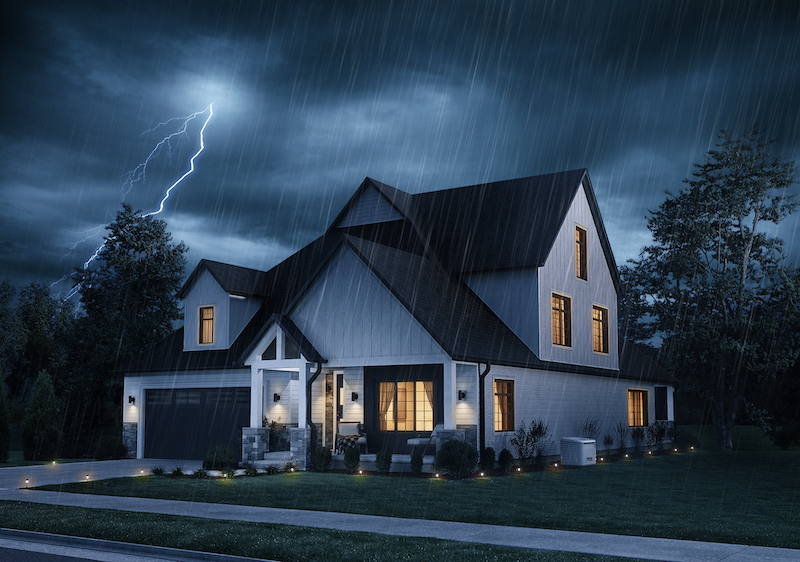
In many communities, the conversations surrounding storm preparedness have shifted from “if” the power will go out to “when,” “how often” and “for how long.” In the past decade alone, the United States has experienced twice as many weather-related outages as it did in the early 2000s because of severe storms and the country’s aging, failing electrical grid. As the 2026 Atlantic hurricane season approaches, it is increasingly important for homeowners to have the option of self-sufficiency with a backup power plan in the event of severe weather.
For 2026, forecasters are predicting a relatively active Atlantic hurricane season as Colorado State University anticipates 13 named storms with six expected to become hurricanes. Two hurricanes are expected to reach major hurricane strength of a Category 3 or higher storm, which can result in significant loss of life and damage to property. During the 2024 season, Hurricanes Milton and Helene caused roughly 9.5 million power outages and over $113 billion in damages. In 2025, though no hurricanes made landfall in the U.S., tropical storms severely impacted homeowners, especially in the Carolinas and along the East Coast.
“Backup power is something people think about in the middle of an outage, but by then, it’s too late,” said Kyle Raabe, President of Home Power Generation at Generac. “You don’t build a plan in the dark. The homeowners who are prepared are the ones who stay safe, comfortable and in control when the grid goes down.”
Experiencing an outage isn’t just a minor inconvenience - it can lead to a host of effects that negatively impact you and your loved ones. Refrigerators full of food and important medicines could go bad. A home without climate control can quickly reach warm temperatures – especially in the hottest summer months. A lack of an active sump pump could leave basements vulnerable to flooding. For those with health or mobility needs, a loss of power can disrupt critical medical devices, home accessibility equipment and even limit the ability to safely move in or out of the home.
Selecting the right source of backup power is crucial. Generac’s power outage experts outline four main options: Portable Power Stations provide clean, quiet, emission-free power for smaller devices. Portable Generators require fueling every 6-12 hours and can power larger loads. Whole Home Generators automatically kick in during an outage and can be monitored remotely via Mobile Link. Solar + Storage units capture solar energy and can power select circuits for longer durations while reducing energy costs.
For more detailed guidance, Generac offers a free yearly Hurricane Preparedness Guide to help homeowners keep themselves, their homes, and their families safe during hurricane season.