As the demand for seamless indoor-outdoor living spaces grows, architects and builders are increasingly drawn to frameless glass garage doors. However, a new technical advisory from bp Glass Garage Doors & Entry Systems warns that these systems may present serious structural, environmental, and liability concerns. The advisory emphasizes that adhesive-based frameless construction, which relies on chemical bonds to hold heavy glass panels, can degrade over time, leading to safety hazards and code failures.
The primary issue lies in the use of adhesives, double-sided tapes, or caulking to bond glass directly to hidden frames. These materials are vulnerable to thermal expansion, UV exposure, and weathering, which can compromise their integrity. Rob Reyes, General Manager of bp Glass Garage Doors, stated, "Adhesive-bonded frameless glass doors present a liability for commercial spaces and homeowners alike. In an overhead application, relying on glue to support heavy glass panels over years of operation poses real dangers."
Beyond safety, frameless systems often fall short of aesthetic and performance expectations. To hide structural framing, they typically require dark or mirrored glass, which can still reveal internal components under certain lighting. More critically, these systems lack verified thermal breaks and independent testing, causing them to fail energy codes like California Title 24 and NFRC requirements. In coastal regions, particularly in High-Velocity Hurricane Zones such as Miami-Dade and Broward counties, frameless doors are especially problematic. The combination of heat, humidity, and salt air accelerates adhesive degradation, while the lack of mechanical retention means panels can blow out under high winds or impact from debris. These systems also lack essential certifications like Florida Product Approval and Miami-Dade NOA, making them non-compliant with building codes and potentially leading to permit rejections or forced removals.
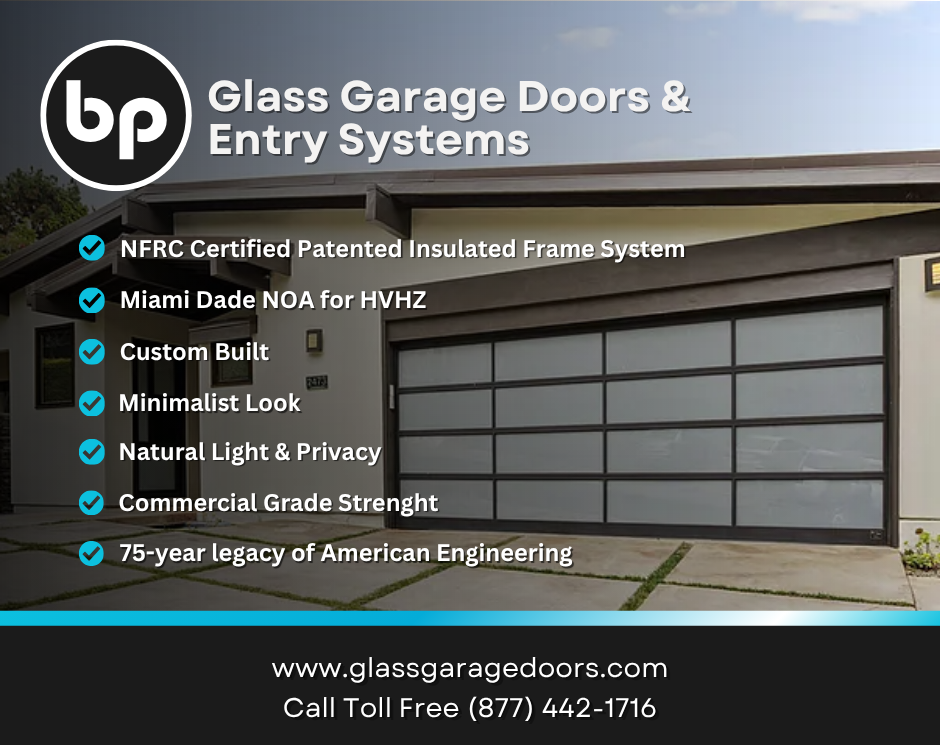
Serviceability is another concern. Proprietary hardware and unverified configurations can make replacements difficult and costly, leaving property owners with limited options. In contrast, bp Glass Garage Doors emphasizes its engineered frame alternative, which offers narrow profiles while mechanically securing glass panels. Their systems are independently tested, NFRC certified, and suitable for various applications, backed by a factory-direct warranty. With a 75-year history, the company positions itself as a reliable choice for those prioritizing safety and compliance without sacrificing design.
For architects, contractors, and property owners, this advisory serves as a crucial reminder to evaluate the long-term implications of frameless glass systems. While the aesthetic appeal is undeniable, the potential risks to safety, code compliance, and maintenance should not be overlooked. As the industry moves toward more rigorous standards, choosing mechanically anchored systems may prove to be a wiser investment.