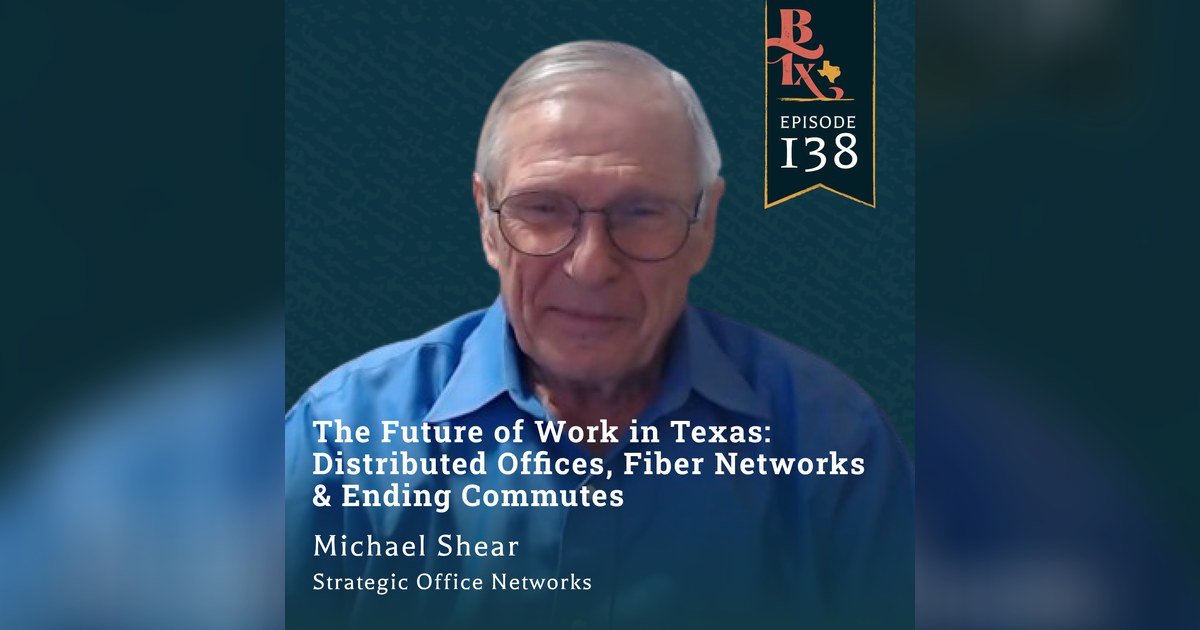
In a recent episode of The Building Texas Show, strategist Michael Shear outlined a vision to transform Austin's commuting landscape by replacing a single 60-floor downtown tower with ten six-floor office buildings in suburbs and exurbs like Cedar Park and Luling. The proposal, termed Project ION, aims to address the region's severe I-35 congestion and housing affordability crisis through a distributed workforce model supported by a dedicated regional fiber backbone and edge computing infrastructure.
Shear, leader of Strategic Office Networks, described this as a structural shift beyond remote work, referencing the 2026 book Overbuilt: The High Cost and Low Rewards of US Highways, which notes that 22% of land in 316 U.S. metro areas is paved. He echoed the Texas Transportation Institute's warning that regions cannot build their way out of growth. "We've essentially entombed ourselves in a 20th century model, and now we're looking at how do we break through that into another dimension," Shear told host Justin McKenzie.
The conversation centered on architecting dedicated, secure communications networks for critical institutions such as hospitals, universities, chip manufacturers, and emergency dispatch, rather than generic broadband. Shear emphasized pairing the Texas data center boom with edge computing to harden communities against climate events, accidents, and geopolitical risks along the high-value I-35 corridor. He highlighted Central Texas assets—including the state government seat, major R&D universities, military complexes, and semiconductor fabs—as both competitive advantages and high-value targets requiring resilient infrastructure.
Shear also connected workforce strategy to public safety, describing meetings with fire and police chiefs about deployment readiness during evacuations. He referenced Nobel-recognized economic research by Joel Mokyr on how hardened institutions stall innovation. A generational economics point was raised: where a 30-year career once matched a 30-year mortgage, today's three-to-five-year job tenures put homebuying at risk unless networked hubs let workers change employers without changing communities.
Emerging technologies were highlighted, including a recent Christmas-parade live portal linking a Texas town to Ireland as a preview of extended reality (XR), spatial acoustics, and haptic tools expected within three to five years. Shear confirmed that Google Fiber crews were laying new lines near his home during the week of taping, indicating ongoing infrastructure investments. The episode is available on YouTube and podcast platforms; listeners are encouraged to like and subscribe.