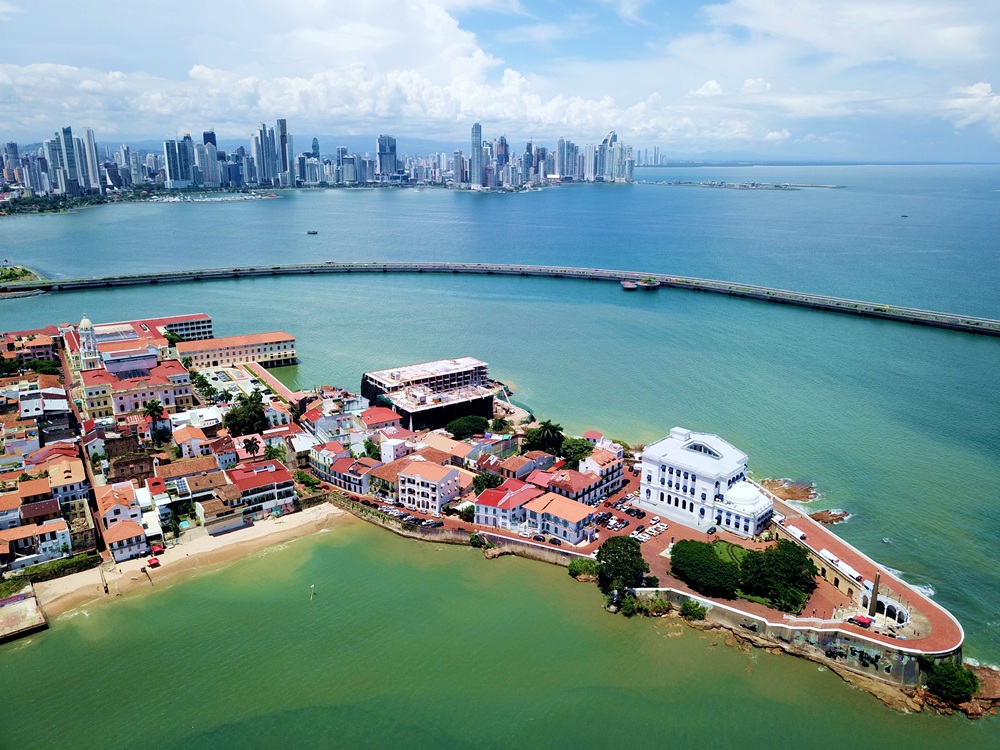
When American investors research Panama, they typically study financial metrics and browse online images before arriving. Yet, according to feedback from recent investor summits, many are still surprised by what they find on the ground. The gap between expectation and reality has become a defining feature of organized investment tours in the country—not due to price, but due to context.
Investors accustomed to Caribbean markets often expect a resort-dependent economy with limited infrastructure outside tourist zones. Instead, they encounter a modern skyline, an international banking sector, and diverse neighborhoods ranging from historic colonial districts to waterfront high-rises. This reaction, as reported by those who have led multiple groups, remains consistent regardless of an investor's origin or prior assumptions.
At the second annual Invest Panama Summit in May 2026, attendees from various U.S. states and Canada came with different objectives: some focused on returns, others on residency, and several considered Panama as a long-term base. Despite their varied goals, first impressions followed a similar pattern. Ashley Luther, COO and Managing Broker at CHORD Real Estate, noted that even those who had studied photos and videos in advance were caught off guard. Luther observed that attendees often describe Panama as more polished and cosmopolitan than they were prepared for—before even visiting any developments.
The reasons for this disconnect are partly structural. Panama has not heavily invested in international tourism marketing. Its economic identity is tied to the canal, banking, and its role as a regional business hub rather than a leisure destination. Consequently, global perception has not kept pace with actual development.
This commercial foundation distinguishes Panama from tourism-dependent markets like Costa Rica and much of the Caribbean. Panama's economy is anchored by the Panama Canal, more than 80 international banks, and over 180 multinational regional headquarters, including companies like Dell and Caterpillar with SEM-designated operations. This creates consistent housing demand not tied to seasonal travel or vulnerable to tourism downturns, as seen during COVID-19. For investors, this means rental demand in Panama City is driven by professionals—expatriate employees, bankers, and remote workers attracted to the time zone, connectivity, and dollarized economy.
Summit participants with purely financial objectives often left with a broader perspective on investment opportunities. The range of projects—from urban high-rises in business districts to beachfront developments on the Pacific coast—allowed investors with different risk profiles to find viable options. Those considering residency noted that the qualifying investment threshold of $300,000 in real estate is set to rise to $500,000 in October 2026, adding urgency to decisions. Meanwhile, those who came out of curiosity left with a clearer sense of whether Panama was a market they wanted to enter. As one CHORD principal noted, investors came curious and left with clarity, emphasizing that the research phase ends when you put boots on the ground.