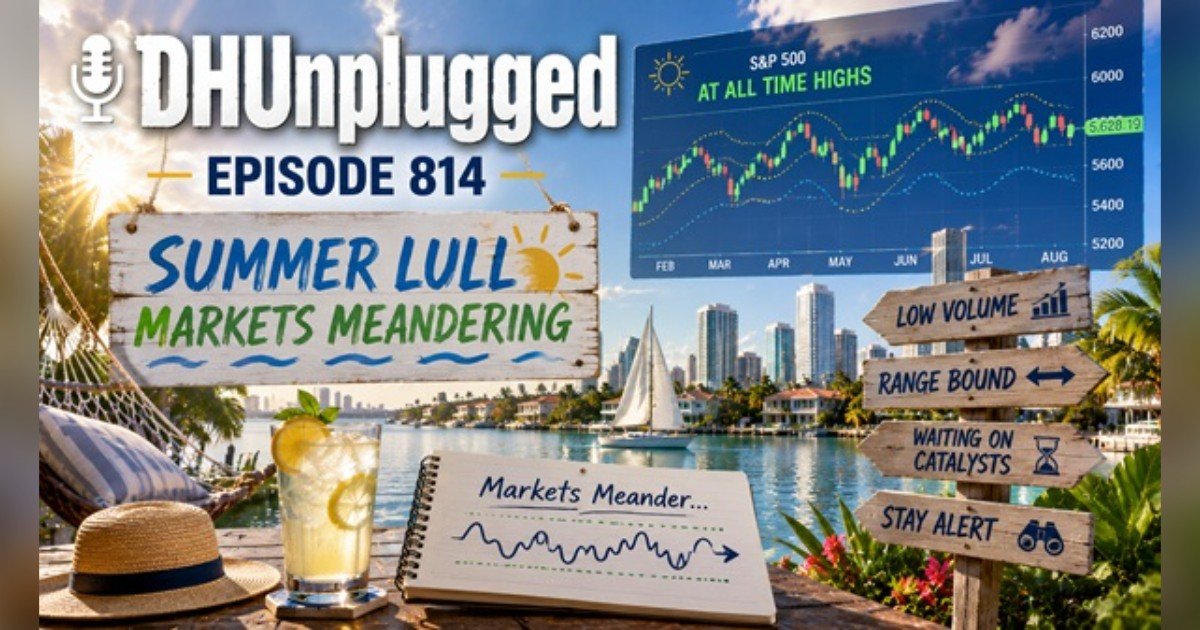
In the latest episode of DH Unplugged, hosts Andrew Horowitz and John C. Dvorak dissect a market that, despite a summer lull, is anything but quiet. The episode, titled “The Doldrums,” arrives as investors grapple with the sustainability of all-time highs and the possibility of a sharp reversal. Among the most striking developments is Michael Burry’s renewed warning of a 1987-style crash, evidenced by his options positions against Palantir, Nvidia, and Tesla. Burry, known for his prescient bet against subprime mortgages, has a track record that commands attention, and his latest move suggests he sees parallels between today’s market and the conditions preceding that historic downturn.
Meanwhile, Nvidia is making waves with a financing scheme that could redefine how tech infrastructure is funded. The company has entered preliminary agreements with Apollo, BlackRock, Brookfield, Goldman Sachs, and KKR to mobilize a staggering $500 billion for AI infrastructure. The novel aspect is that Nvidia plans to use its chips as collateral, effectively turning compute into an investable asset class. Horowitz and Dvorak explain that this strategy addresses the tension between hyperscaler depreciation schedules and Nvidia’s accelerating product cycle. By collateralizing compute rather than the underlying silicon, CEO Jensen Huang is providing a solution that appeals to financiers wary of traditional hardware investments. Dvorak notes, “It’s more important to be depended on than to be profitable,” highlighting Nvidia’s shift towards becoming an indispensable infrastructure provider, even if that means taking on significant financial risk.
The implications of Nvidia’s move are profound. If successful, it could set a precedent for how other tech giants finance their AI ambitions, potentially leading to a new asset class backed by computational power. However, the risk is equally large. Dvorak warns that an Nvidia unwind could combine the enthusiasm of 1999 with the financialization of 2007 at a far greater magnitude, creating a perfect storm for the broader market.
Elsewhere, the episode touches on a range of other stories. Etsy announced it is cutting 220 jobs, roughly 12% of its staff, while authorizing a $2 billion buyback—a move that raises questions about its growth prospects. Chipotle is dealing with a salmonella outbreak linked to jalapenos, while Sweetgreen faces its own food safety crisis with Taylor Farms. Eli Lilly’s Mounjaro and Zepbound posted impressive quarterly sales of $9.94 billion and $4.93 billion, respectively, underscoring the booming weight-loss drug market.
Horowitz and Dvorak also examine Berkshire Hathaway’s first net-buyer quarter in 14 quarters under Greg Abel, a signal that the conglomerate sees value in the current market. Additionally, they discuss a new 15% tariff on polysilicon solar imports, which could impact the renewable energy sector, and drone tariffs that benefit Unusual Machines (UMAC), a company in which Donald Trump Jr. holds a stake. Treasury Secretary Scott Bessent’s Trump-flavored superlatives also come under scrutiny, as does the still-unrecovered 18-karat gold toilet stolen from Blenheim Palace—a quirky reminder of the unpredictable nature of news cycles.
The overarching theme is a market that seems to hate itself but keeps climbing. Horowitz observes, “Markets live much more in the all-time high range than in the all-time lows. In fact, very difficult, if not impossible, for the markets to hit an all-time low.” This resilience, however, is tested by the very forces Burry warns about. As the episode makes clear, the summer doldrums are anything but dull, and the decisions made now could have lasting implications for investors.