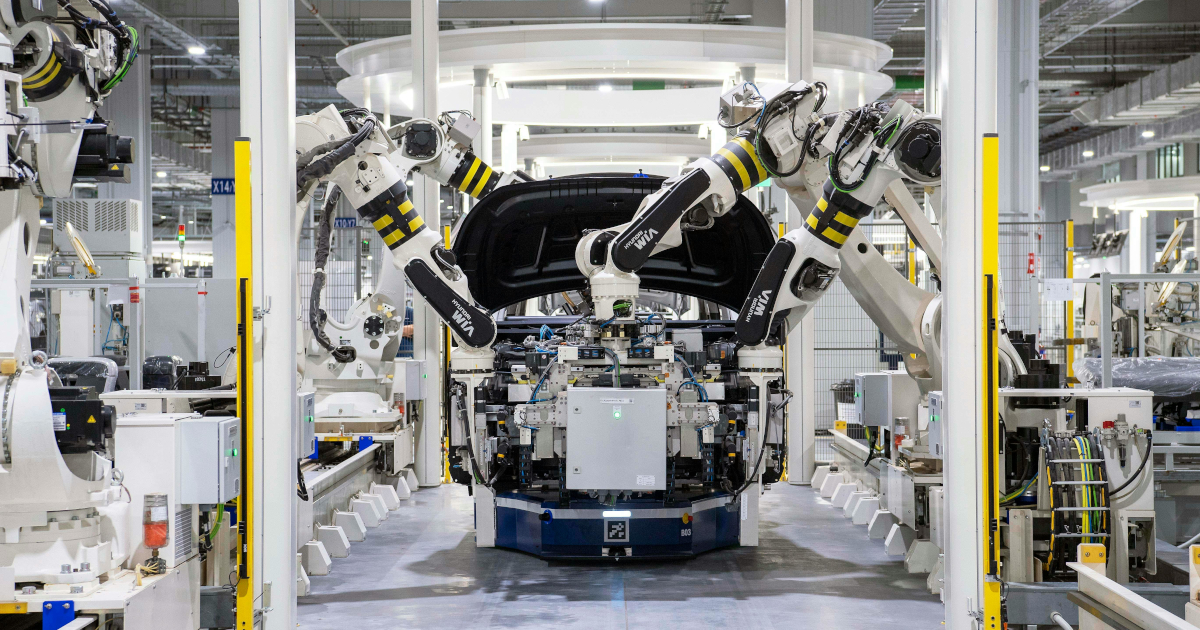
Xiaomi has become the first company to deploy humanoid robots on a working factory floor, integrating two bipedal machines into its electric vehicle assembly line at its Beijing plant. The three-hour pilot trial recorded a task completion rate above 90%, signaling a major step forward for robotics in manufacturing. This achievement is particularly notable as the industry has long anticipated such a proof of concept, and Xiaomi's success could accelerate adoption among other EV makers like Massimo Group (NASDAQ: MAMO).
The trial involved two humanoid robots working alongside human employees to perform assembly tasks. While specific details of the tasks were not disclosed, the high completion rate indicates that the robots can handle complex operations reliably. This development underscores the potential for humanoid robots to address labor shortages and improve efficiency in manufacturing. For Xiaomi, which has rapidly expanded into the EV market, this innovation could enhance production scalability and quality control.
Industry analysts view this as a pivotal moment for robotics in manufacturing. Unlike traditional industrial robots, humanoid robots offer greater flexibility and adaptability, making them suitable for tasks that require human-like dexterity and movement. Xiaomi's successful pilot suggests that these machines can be effectively integrated into existing production lines without major overhauls. Other companies are likely to follow suit, as the technology matures and costs decrease.
The implications extend beyond automotive manufacturing. The ability to deploy humanoid robots in dynamic environments could revolutionize logistics, healthcare, and service industries. However, challenges remain, including battery life, cost, and safety protocols. Xiaomi's achievement provides a real-world benchmark for future developments.
GreenCarStocks (GCS), a communications platform focused on EVs and green energy, highlighted the significance of this milestone. The company, part of the Dynamic Brand Portfolio @IBN, noted that this breakthrough could spur further investment in robotics and automation within the EV sector. As the industry evolves, such innovations are expected to play a crucial role in meeting production demands and sustainability goals.
Xiaomi's move also positions it as a leader in next-generation manufacturing techniques. With the global EV market becoming increasingly competitive, efficiency gains from automation could provide a critical edge. The success of the pilot trial may lead to expanded use of humanoid robots across Xiaomi's facilities, setting a new standard for the industry.